
Lux
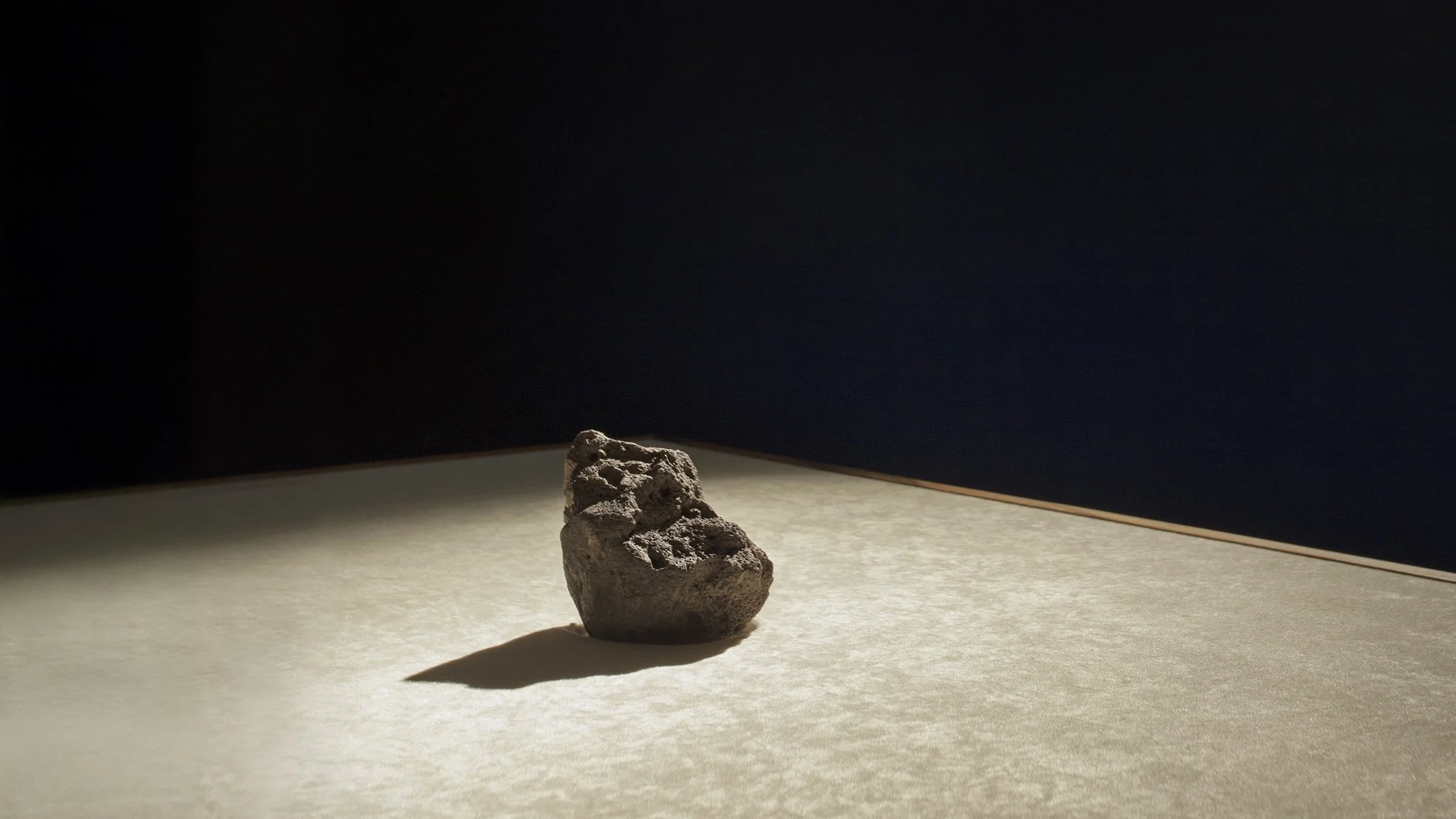
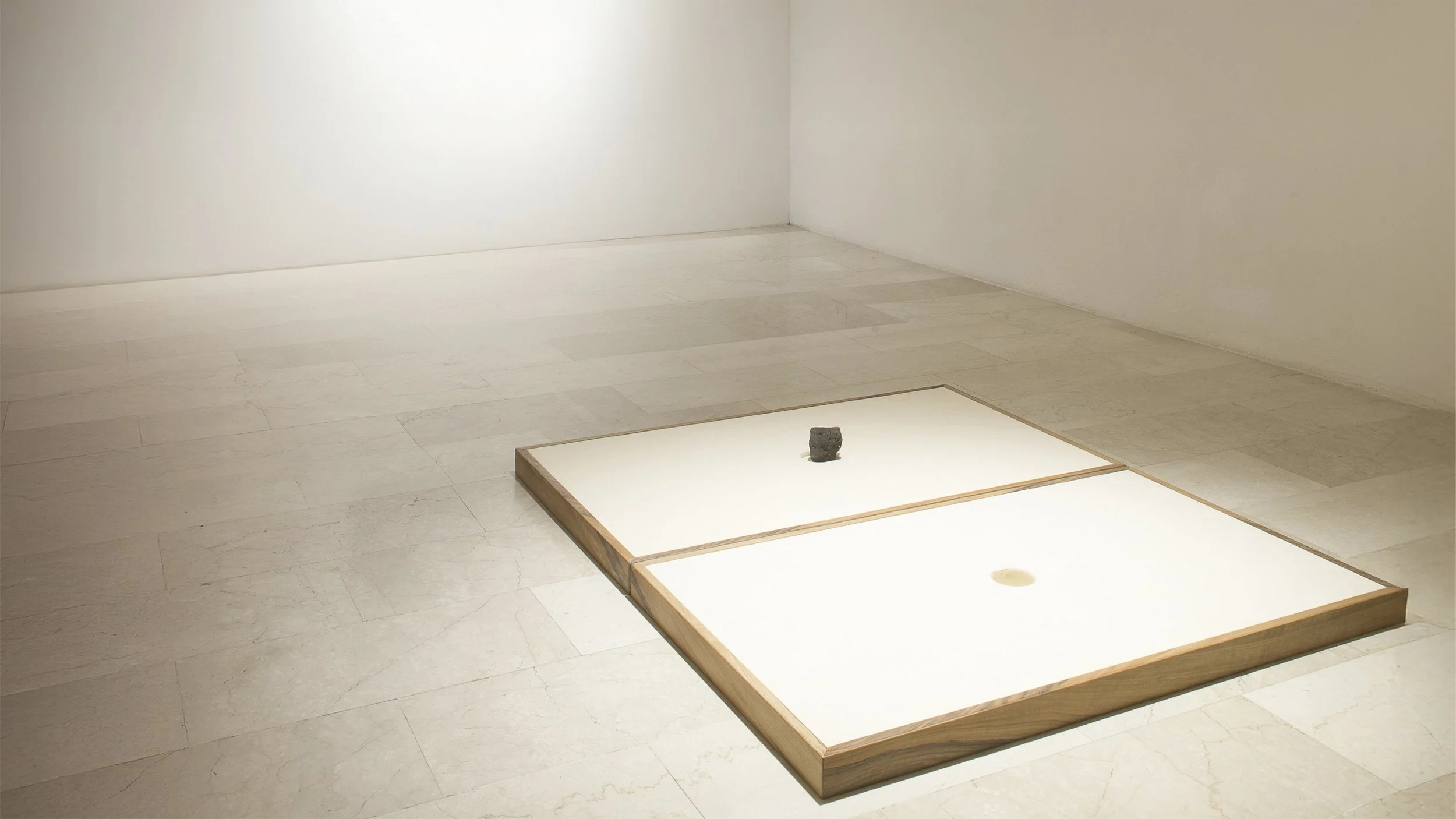
For this work, a mathematician calculated the weight of the sunlight that reaches planet Earth.
With this information, the artist traveled to Mount Chimborazo, the place on Earth closest to the sun, searching for a stone that matched perfectly to the weight of light.
In 1971, NASA’s manned mission Apollo 15 landed on the moon. One of the experiments conducted during the mission was the testing of the “Equivalence Principle”, a physical law stating that without air resistance, all objects fall the same way.
The experiment was broadcast live to millions of people: the astronaut held a hammer in his right hand, a feather in his left hand, and kept them both at shoulder level. He then simultaneously released the two objects. As predicted, the hammer and the feather reached the moon’s surface at the same time.
Two thousand years prior to this, Babylonian astronomers had, in fact, mastered the mathematics behind this principle.
Lux
A stone as heavy as all the sunlight over planet Earth. Stone (8 x 6,5 x 5 cm), wooden case (120 x 146 x 5 cm).