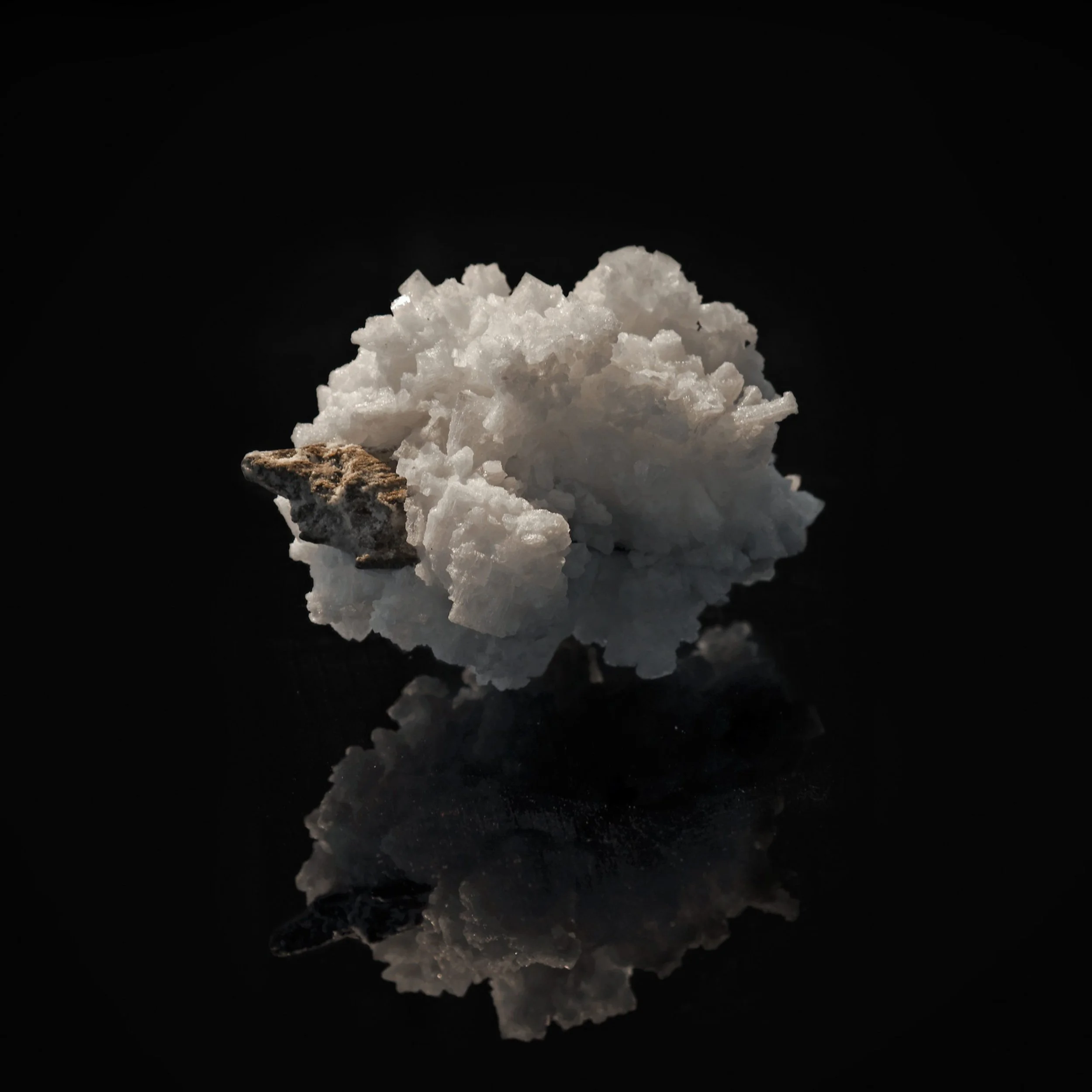
Baneque
A crystallized phantom island.
In 1492, upon landing in the Americas, Christopher Columbus (the so-called “discoverer”) encountered people from a native community. He inquired about gold.
They informed him of an island called Baneque, which supposedly held all the riches he was searching for. Based on their indications, the sailor spent the following two months searching for an island that did not exist.
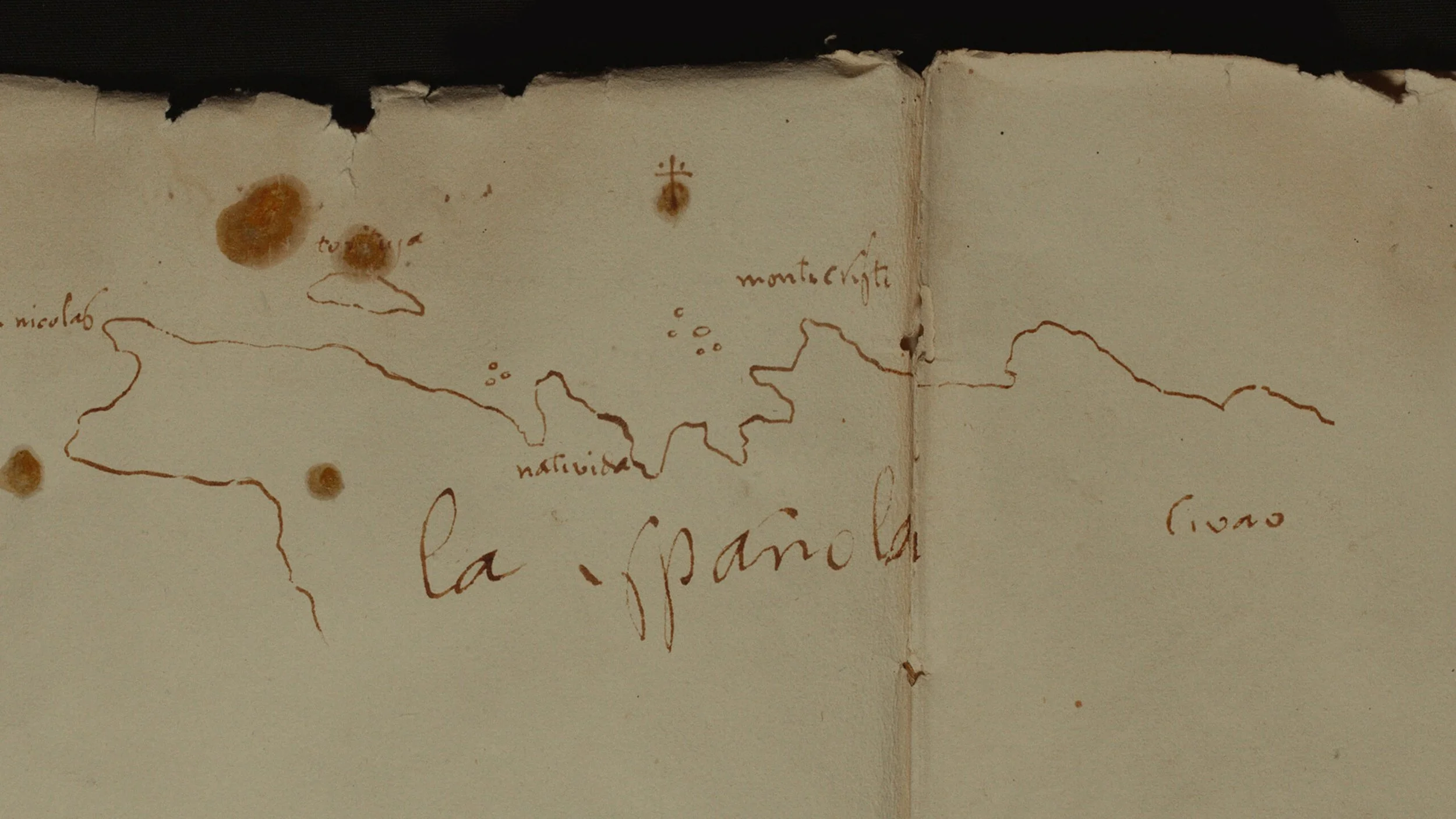
For this project, the artist was set to “discover” what had never been found by the colonial enterprise. Departing from the very map drawn by Columbus, Santillán traveled to its void.
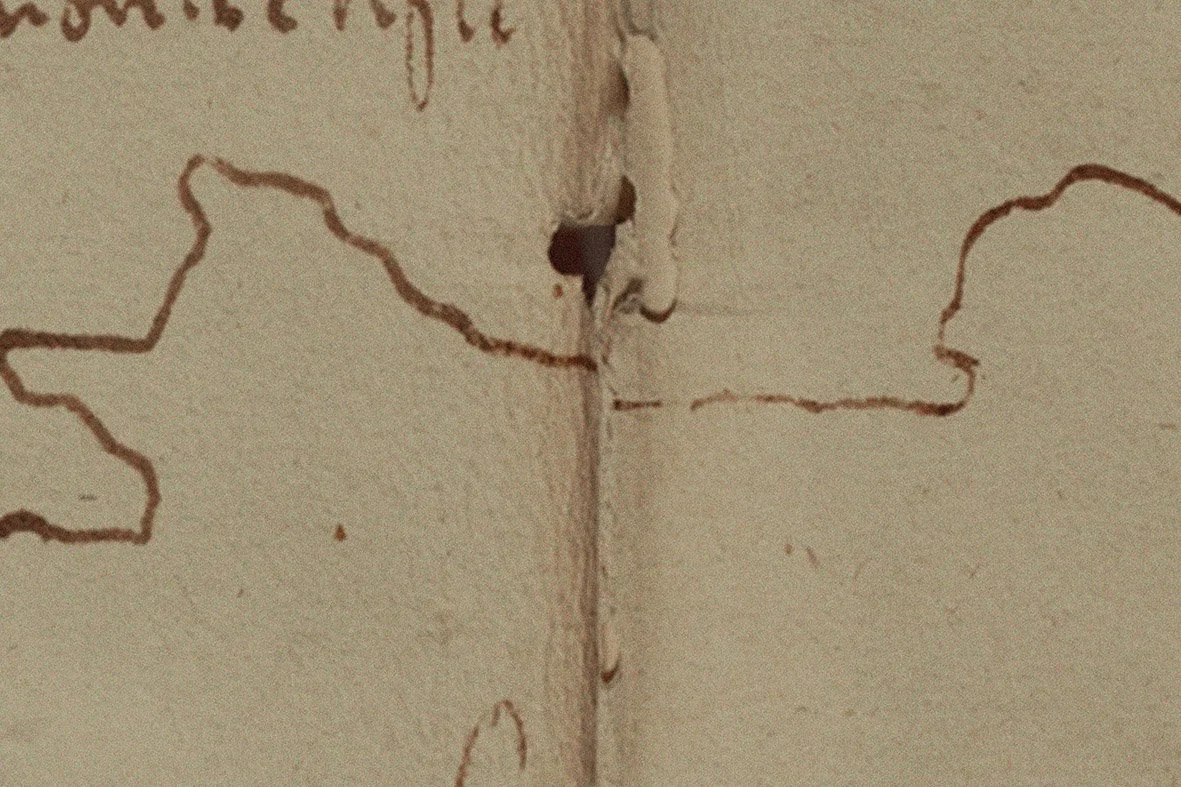
Actual hole in Columbus’ map. If charted, it is located 4.2 miles into the ocean. This hole in the map —through its own material absence— clearly suggested the outline of an invisible island.
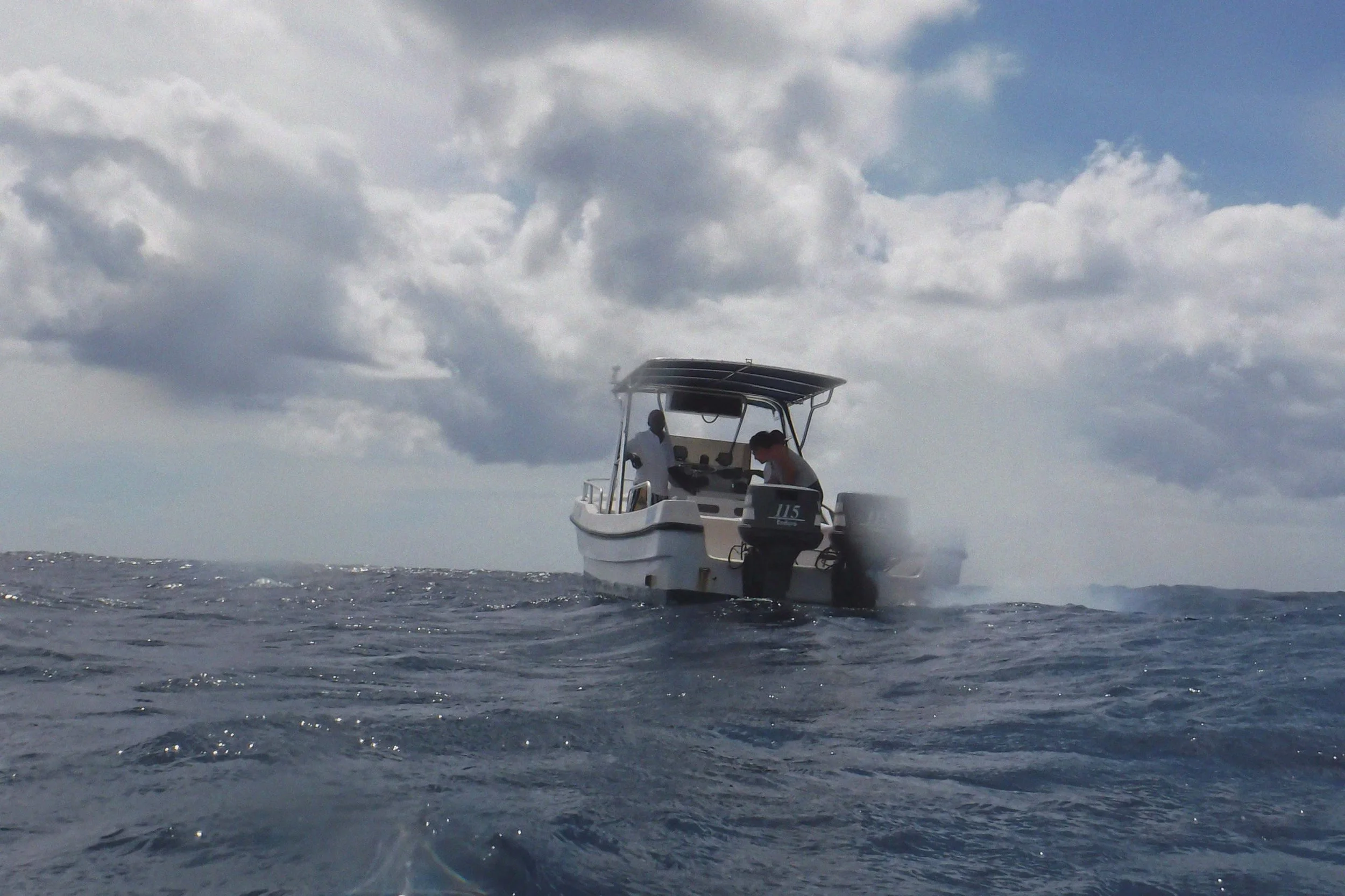
The artist went there and gathered many liters of sea water.
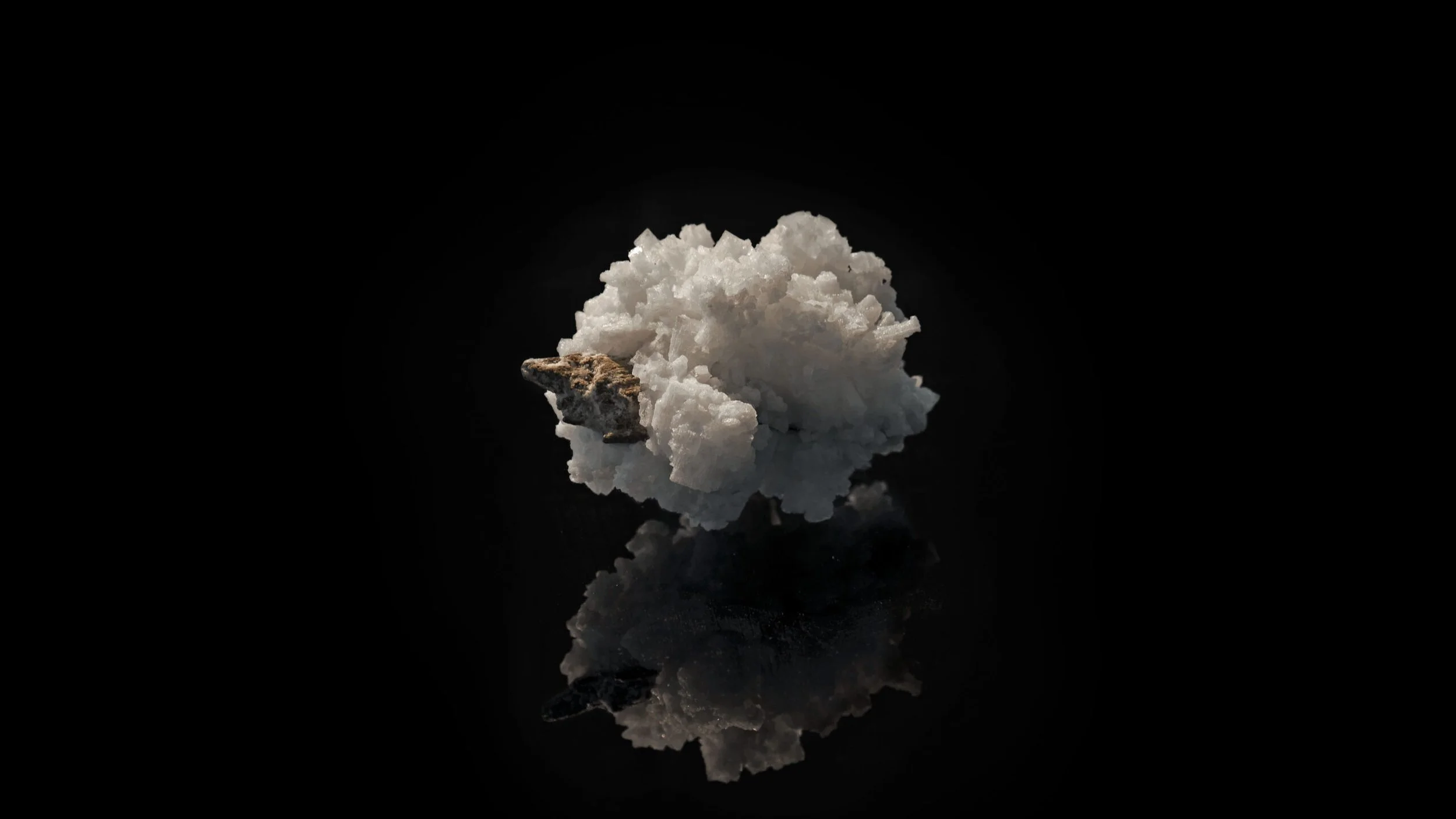
In the following days, the gathered sea water was left to naturally evaporate. From this process, crystals and minerals began appearing. At last, the phantom island revealed itself.
Baneque
A crystallized phantom island. Salt water crystals displayed on a plexiglass sheet.